

Spatial biology technologies continue to transform how researchers study tissues in their native context. By preserving spatial information, these approaches allow scientists to understand how cellular organization and molecular interactions shape biological function and disease.
The Xenium platform from 10x Genomics already enables high resolution spatial transcriptomics through in situ detection of RNA molecules directly within tissue sections. With the introduction of Xenium Protein Panels, researchers can now extend these analyses to include protein expression, opening the door to deeper multiomic insights within the same experiment.
RNA and protein analysis in the same tissue section
Xenium Protein Panels allow researchers to measure protein expression together with RNA transcripts within the same sample. This combined approach provides a more comprehensive view of tissue biology by linking gene expression patterns with protein level information.
Because proteins are the functional molecules responsible for many cellular processes, integrating protein detection with transcriptomic data helps clarify how molecular signals translate into biological activity. This is particularly relevant in fields such as cancer biology, immunology and developmental research, where cellular interactions and signalling pathways play a critical role.
Designed for FFPE samples and complex tissues
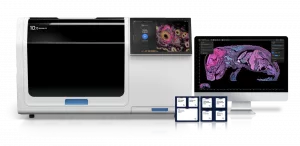 The Xenium platform is compatible with formalin fixed paraffin embedded (FFPE) samples, which represent one of the most widely available tissue formats in clinical and translational research. This compatibility allows scientists to apply spatial multiomic approaches to archived specimens and clinical cohorts.
By combining RNA and protein measurements in spatial context, researchers can investigate tissue architecture, cell type composition and molecular heterogeneity within complex biological systems.
Expanding the potential of spatial multiomics
The integration of protein panels within the Xenium workflow strengthens the ability to study cellular communication, immune microenvironments and disease mechanisms at high resolution. Researchers can explore how gene expression and protein activity interact across different cell populations while maintaining spatial relationships within the tissue.
These capabilities make Xenium an increasingly powerful platform for studies focused on tumour microenvironments, immune responses, tissue development and biomarker discovery.
Supporting advanced spatial biology research
At BonsaiLab, we support laboratories across Spain and Portugal in implementing advanced genomics and spatial biology technologies. Through scientific guidance, technical training and application support, we help research groups integrate tools such as the Xenium platform into their experimental workflows.
For more information about Xenium Protein Panels and spatial multiomics applications, the BonsaiLab team is available to assist researchers interested in exploring these capabilities in their projects.