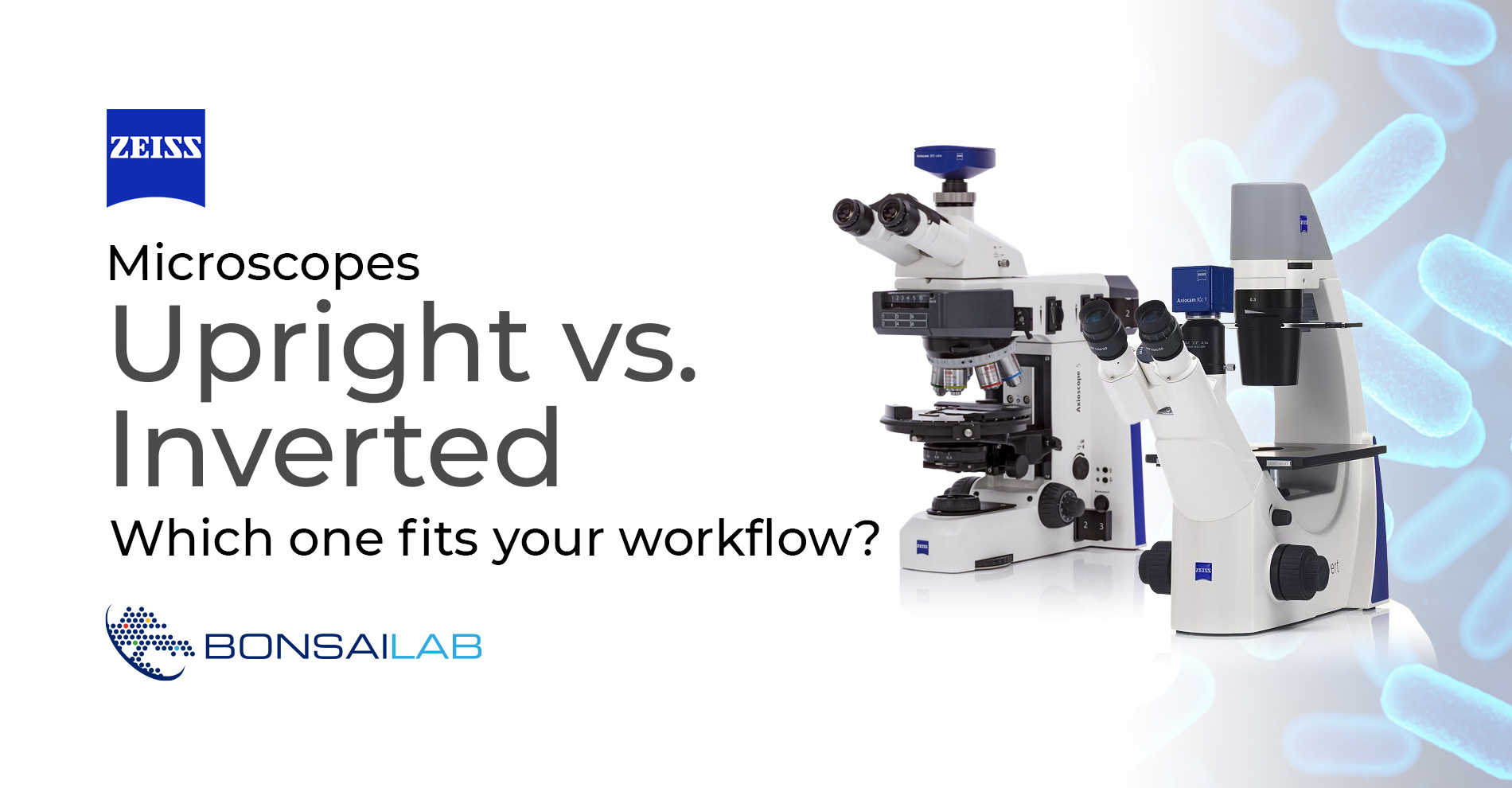
Choosing between an upright and an inverted microscope isn't just about form factor—it's about matching the instrument to your sample, container, and daily routine so you get consistent results with less effort.

Upright

the lens and objectives
look down on the sample

  • Best for prepared slides: stained sections, smears, and standard transmitted/reflected light contrasts.
  • Practical benefits: quick access to contrast modules and controls, easy training and routine use in clinical, academic, and QC settings.
  • Consider if: your work is predominantly on glass slides and thin specimens.

Inverted

the lens and objectives
look up on the sample

  • Best for live-cell work: culture flasks, multi‑well plates, Petri dishes, and micromanipulation.
  • Practical benefits: generous clearance for accessories, comfortable operation inside laminar flow cabinets, straightforward phase/DIC/fluorescence on living cells.
  • Consider if: you need space under the sample and handle volumetric or living specimens in containers.

How to decide in 15 seconds:

We are the official distributors of ZEISS microscopes in Spain and Portugal.

Our experts are ready to advice and assist you to provide a solution that is tailored to your samples, contrast needs, ergonomics and workflow, don't hesitate to reach out.